Just as women’s basketball is gaining unprecedented momentum, the NCAA is facing backlash over new restrictions on media access to its women’s basketball tournament.
According to USA Today reporter Mitchell Northam, the NCAA sent a memo last week outlining new protocols and rules for media covering the tournament. The memo, obtained by Northam, details several significant changes that could limit how journalists cover the increasingly popular sport.

“The NCAA will … no longer host press conferences or open locker-room access on the day between the Sweet 16 and Elite Eight for teams playing in the regional final,” Northam’s report reads.
NCAA Shutting Down News Conferences & Locker Room Access
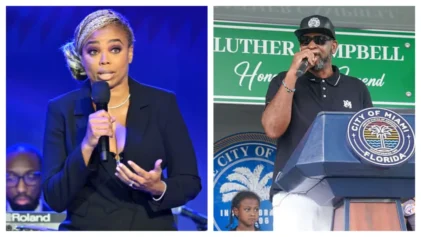
The latest move to restrict media access has drawn criticism from longtime supporters of women’s basketball, including former ESPN host Jemele Hill. Hill began her career covering women’s college basketball for The News & Observer in Raleigh, North Carolina in the 1990s.
Hill questioned why the NCAA would choose this moment to reduce media access rather than expand it. She sees the move as another puzzling decision by those overseeing women’s basketball that could undermine the sport’s progress.
If the goal is to encourage mainstream media outlets, which often gravitate toward drama, to focus more on basketball-related storylines, then restricting reporters’ access to news conferences — a cornerstone of tournament coverage — seems counterproductive, Hill argued in a post on X.
“Somebody with the NCAA is going to have to explain the point of this. For years, those in women’s hoops have complained about the lack of media coverage. They were absolutely right to do so. But now that the game has exploded, they’re gatekeeping instead of continuing to grow the game? I don’t get it. I’d love to know the rationale,” she captioned in a post responding to the announcement.
The comments poured in, with many agreeing with Hill — including some who don’t share her political views or necessarily agree with her takes on her popular podcast, “Flagrant and Funny.”
“The women’s side has always been run poorly,” one user commented.
“Visionary and NCAA have never crossed paths,” another agreed.
“This policy change will throttle tournament news coverage,” said one fan, who doubted that the announced policy will last long.
“I just can’t with women’s sports,” expressed one netizen. “Between the foolishness of the WNBA and the ridiculous NCAA, I don’t watch. And they did it to themselves.”
Women’s college basketball and the WNBA have never been more popular among male viewers and mainstream sports fans. Caitlin Clark, Angel Reese, Paige Bueckers and other young stars have captivated audiences, helping elevate the sport’s visibility, profile and marketability.
Media coverage and social media have played a major role in that growth. Whether the conversations are positive or negative, fans have plenty to say, and the increased attention has created significant financial opportunities — from lucrative name, image and likeness (NIL) deals for college players to a historic increase in WNBA salaries under the league’s latest collective bargaining agreement. The new deal raised the salary cap from $1.5 million in 2025 to $7 million in 2026, while top rookie salaries climbed to roughly $500,000.
No Transcription Services Hurts Reputable Smaller Publications Without Travel Budget
In addition to limiting reporters’ access to news conferences, the NCAA will also discontinue its distribution of news conference transcripts to media outlets. So far, reports indicate that the new media policies will apply only to the women’s tournament.
The change could disproportionately affect smaller publications that lack the financial resources to send reporters to the tournament’s later rounds. Those outlets often rely on postgame news conference transcripts, distributed by email, to cover teams and players they otherwise might not have access to.
Without access to those limited press opportunities, smaller publications could find it more difficult to produce original reporting and maintain an independent voice in an increasingly crowded sports media landscape.
Fans Agree With Jemele Hill That NCAA Is Hustling Backward
A large contingent of fans say this is simply the NCAA being the NCAA, making decisions that seem to defy logic. Others argue that coaches pushed for the changes to make things easier for themselves and their players amid the hectic travel schedules and frenzy that come with advancing in the NCAA Tournament.
With tight travel turnaround times, eliminating media obligations altogether would likely be an ideal scenario for coaches. The players, meanwhile, don’t appear to have much of a problem with the arrangement, particularly since media exposure can help promote their personal brands and the game of basketball.
“NCAA with a class on how not to care about the game! FYI way too much competition out there to not grant an insight to the players and games. We used to call this too stupid instead of smart for your own good!,” one fan joined in the criticism.