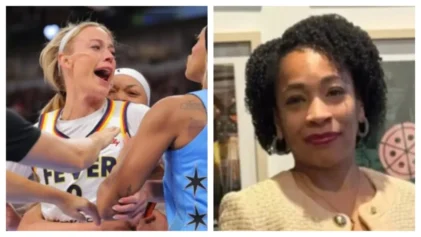
Back in August, TV host Elle Duncan called the WNBA the “most toxic space to cover” in sports media currently.
Duncan doubled down on that sentiment during an appearance this week at the “Tuned In” summit, a sports media event in New York City hosted by Front Office Sports.
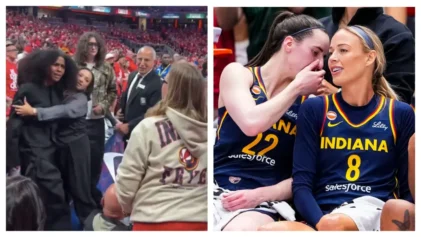
The toxic environment surrounding the WNBA developed, Duncan says, as new WNBA fans and “bad-faith actors” flocked to the league in the aftermath of Caitlin Clark being drafted No. 1 overall by the Indiana Fever in 2024.
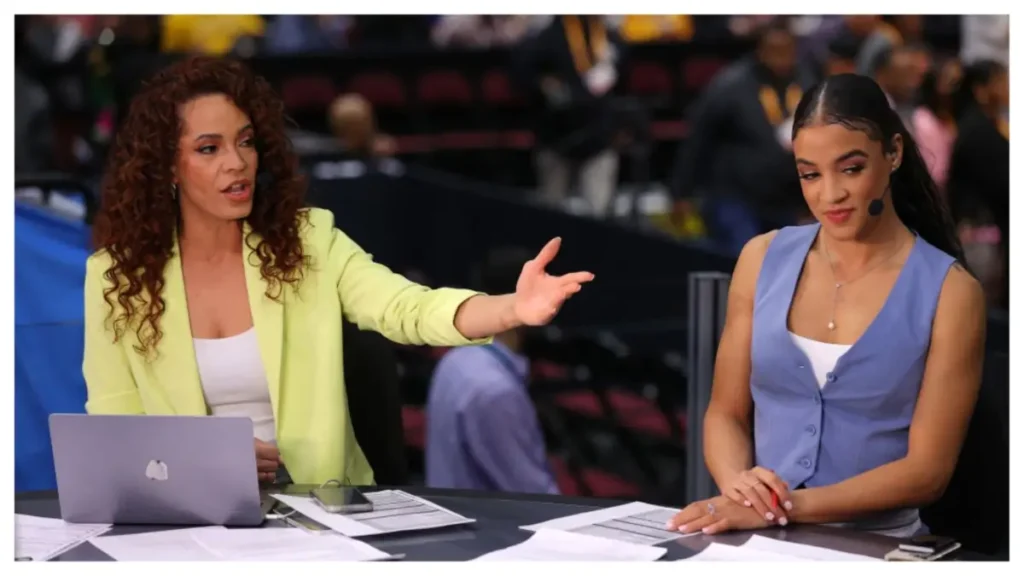
Duncan believes that Clark’s presence in the WNBA opened the door for people to attack Black women and queer women, who comprise the majority of the rosters in the league.
“It feels like open season to dunk on Black women because we do not have protection. Because no one cares. Because we are low-hanging fruit,” Duncan said on Tuesday. “Because it is very easy to dunk on us since we are, I would say, outside of transgender people, the most marginalized of the marginalized groups.”
RELATED: WNBA TV Host Elle Duncan Calls League ‘Most Toxic Space To Cover’ In Sports
“It’s twofold for them — so you get to lift [Clark] up, and you get to, ultimately, reduce everybody else that isn’t her to nothing,” Duncan added about new WNBA spectators that have directed hate at other players in the league.
Duncan joined ESPN as a “SportsCenter” anchor in 2016, and served as a host for WNBA and other sports programming on the network before leaving the company at the end of 2025. She now covers the WNBA for the USA Network and other sporting events as a host on Netflix.
While Duncan is frustrated by the current discourse surrounding the WNBA, it is also hard to ignore the positives Clark’s arrival helped bring to the league.
Just over three months after Clark was drafted in 2024, the WNBA agreed to a media rights deal worth a reported $3.1 billion over 11 years. Under a new collective bargaining agreement reached by the players and WNBA this past March, the salary cap rose to $7 million, which was up from $1.5 million in 2025.
Max salaries for veteran players also rose to $1.4 million this season after being around $250K in 2025, while minimum player salaries also increased from just under $60K to $270K.
The increases in pay, though, have correlated with increased scrutiny and controversy. Racist and misogynistic hate directed at players, along with recent debates about trans athletes participating in women’s sports, have sometimes overshadowed the basketball being played on the court.
“The reason it’s toxic is because you love it so much. Because there are so many incredible things about it,” Duncan said about the WNBA this week. “Because there is this community that really truly doesn’t exist anywhere else, and you know how special it is. And to have it deduced to a culture war is disgusting.
“And it sucks. It sucks because it’s not getting any better. It sucks because, we thought three years ago when this started, ‘It will die down. They will see themselves out. Everything will regulate.’ And we are still here, and that’s why it’s toxic.
“It’s toxic because you cannot say anything without pissing off one faction of the population. You can’t praise one person without pissing off the other faction of the population. It’s a disingenuous space that the people that are talking about the most are not fans and don’t care. They’re literally there as opportunists to be divisive.
“And it’s working. And that’s why it’s toxic, because I love [the WNBA] and hate it all at the same time.”